

Should You Hire a Christmas Tree Stylist? Why Planning Early Makes All the Difference
By Nic Haysey, Haysey Designs — Interior Designers based in Northamptonshire
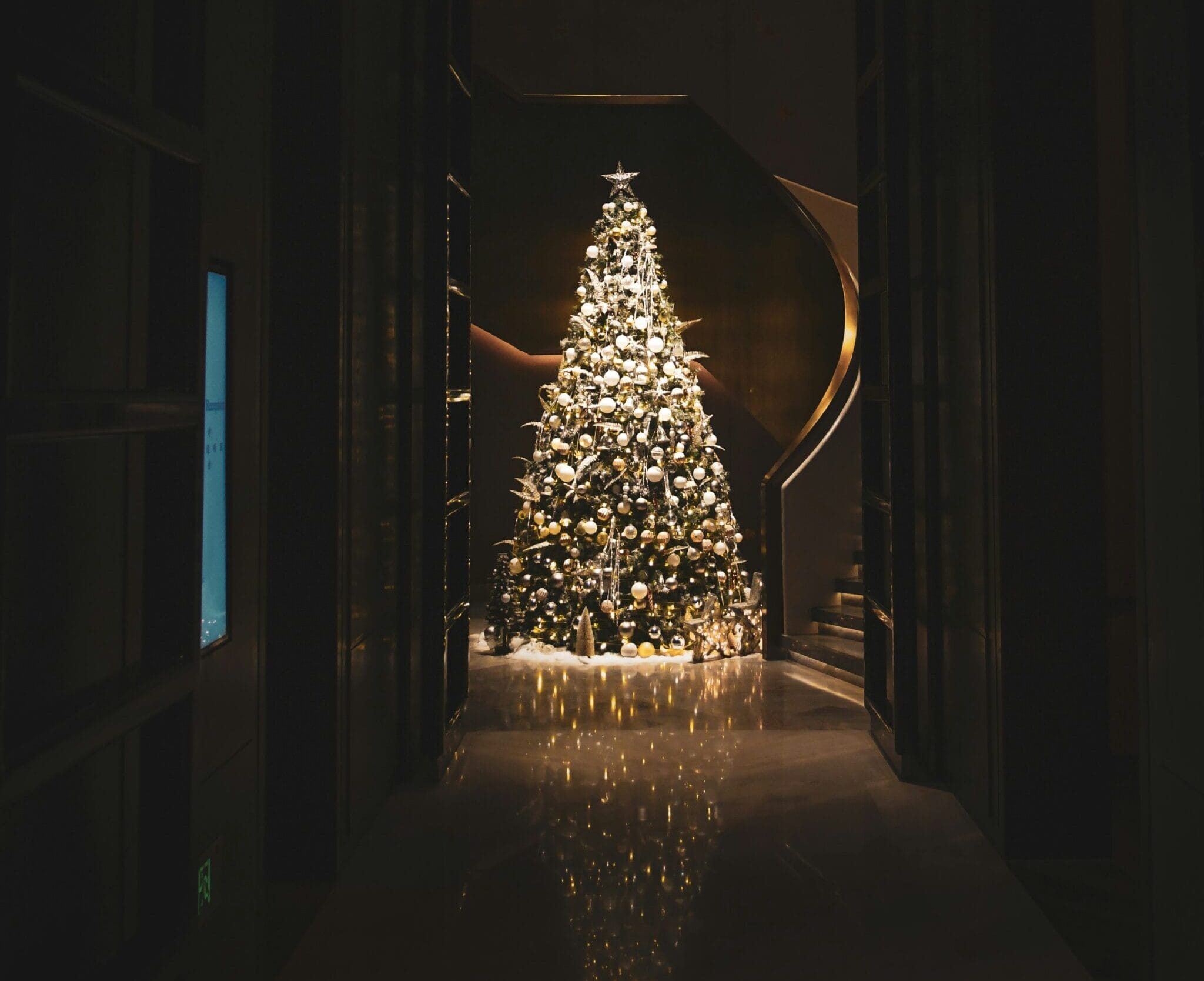
Every year, somewhere roughly around the second week of December, I have heard a version of the same sentence: “I wish I’d sorted the tree sooner.”
The decorations are by this point, usually in a heap of boxes open on the floor, the tree that looked perfect at the farm is more often than not a touch too wide for the bay window, and the evening you set aside to make it beautiful has turned into a tangle of lights and mild panic.
This is exactly the moment where a Christmas tree stylist could really help, and why the best time to think about it is now, not the week before your guests arrive.
Christmas is when most of us open our homes to more people than at any other time of year.
The tree is usually the first thing they see. It sets the tone for the whole festive period, so it really does deserve the same care you would give any other part of your home. You can tell your husbands I said that too! (I know there are a few out there who think we fuss over decorations and styling without cause).
In this article, I’ll explain what a tree stylist actually does, who it suits, and why booking early is one of the most useful things you can do for a calm and more organised Christmas.
Thinking about seasonal styling this year?
If you’d like help planning a tree and festive scheme that feels like a more in sync part of your home, you can book a call with me here or browse more ideas on our blog.
1. What Does a Christmas Tree Stylist Actually Do?
A good stylist does far, far more than hang baubles on a pine tree. The work starts with your home, not the decorations. It usually includes a number of things such as :
- Choosing the right tree for the space, thinking about the height available, width and shape, whether the impact would be best with real or artificial.
- Agreeing a colour palette and mood that sits quite seamlessly with your existing interiors.
- Sourcing good quality decorations like glass baubles, the right lights with a consistent colour scheme, ribbon and foliage that will set everything off nicely together, often working with what you already own.
- Installing and dressing the tree (which takes quite a bit of time), plus sourcing and adding garlands, decorating mantels, staircases or creating unique and quite stunning tablescapes if you’d like them.
- Taking it all down in January and packing it away carefully, labelled, packaged and ready for next year.
That last point is underrated. Anyone who has wrestled a long string of lights back into its box knows exactly what this entails and why this in itself is a valuable service – I mean…who’s with me?
In many ways, it’s interior design in miniature. The same principles apply for scale, balance, light, symmetry and colour.
2. Is Hiring a Tree Stylist Worth It?
It isn’t for everyone – and that’s perfectly fine. It is a luxury service.
There is also that fact that some families love decorating together, forming part of their family tradition, and that ritual is so worth protecting. But it tends to make real sense if you’re hosting over Christmas and New Year and you want the house ready without losing a weekend to it with everything else you have on your plate.
It’s also useful if you have a large or awkward space, such as a double-height hallway, a galleried landing or a vaulted extension and own neither scaffolding nor have the time to scale and decorate all day.
If you’ve recently renovated and want the festive scheme to complement the new interior rather than fight it and create that wow factor, maybe this is the time to draft in some assistance.
If you run a holiday let or small commercial space where first impressions matter to guests and customers – then this is a fantastic time to use a tree stylist.
Finally, there are those of use, who simply don’t enjoy it, and much would rather spend those hours elsewhere.
Here’s how the two approaches usually compare:
| Decorating yourself | Hiring a stylist | |
| Your time | Several evenings or a full weekend | A short conversation to agree the brief |
| Planning | Often left until December | Agreed weeks in advance |
| Fit with your interior | Depends on what is in the box | Designed around your colours, materials and lighting |
| Sourcing | Busy shops and thinning stock | Earlier access to stock and trade suppliers |
| Take-down | Usually rushed in January | Packed, labelled and stored for next year |
| Cost | Lower upfront, though impulse buys add up | A styling fee, with fewer wasted purchases |
Design Tip: If you love decorating as a family, consider a hybrid. A stylist can handle the lights, the structure and the statement pieces, leaving the sentimental decorations for you to add together. You get the polish without losing the tradition and it takes you far less time.
3. Why Planning Early Makes Such a Difference
If there’s one thing I’d like you to take from this article, it’s this – a calm Christmas starts in October. I know, sorry, don’t hate me for saying it to early. However, what I want you to note is that –
- Diaries fill up quickly. Seasonal stylists usually take on a limited number of homes, and the most popular installation dates in late November and early December go first.
- Stock sells through. Quality decorations, particularly glass, natural materials and longer runs of warm-toned lights, are often gone by early December.
- The best trees are reserved early. Many growers let you choose and tag a tree in advance. The British Christmas Tree Growers Association is a useful place to find a reputable local grower.
- Measuring takes time. Ceiling heights, doorways and furniture that needs moving are all far easier to work out with a few weeks’ notice.
- It protects your budget. Planned purchases are considered purchases. Last-minute ones rarely are.
Planning early also gives you space to think about the wider picture: the mantel, the dining table, the front door and the lighting in the rooms where you’ll actually spend Christmas.
Planning a bigger project for the new year?
The quieter weeks before Christmas are a lovely time to start thinking it through. The Exploratory is a structured session to map out layout, light and budget before you commit to building work.
4. How to Make Your Tree Feel Part of Your Interior
The trees that look most beautiful are rarely the most heavily decorated. They’re the ones that feel as though they belong in the room.
Scale it properly. Allow around 20 to 30cm between the top of the tree, including the topper, and the ceiling. A tree that’s too small looks lost in a generous room. One that’s too wide will swallow a doorway or block valuable daylight.
Take your palette from the room. Look at what’s already there: the timber tones, the fabrics, the metal finishes on lamps and door furniture. Brass and warm golds sit beautifully with walnut and ochre. Silver and soft white suit cooler, paler schemes.
Think about light. Warm white lights, around 2700K, feel softer and more flattering in the evening than cool white. Weave them deep into the branches, not just around the outside, so the tree glows from within.
Choose the position carefully. Keep real trees well away from radiators, log burners and open fires. They dry out quickly near heat, which is a safety risk as well as a fast route to a bare tree by Christmas Eve. The RHS has helpful guidance on choosing and caring for a real tree.
Design Tip: Limit yourself to two or three colours, plus one natural material such as dried orange slices, pine cones, wooden beads or velvet ribbon. Restraint is what makes a tree look considered rather than crowded.
These are the same principles we apply across our full-service interior design projects, and you can see how colour, light and texture come together in our portfolio.
5. A Simple Timeline for a Calm Christmas
- Early to mid October: Decide whether you’d like help, and book your stylist.
- Late October: Agree the brief, measure the space and look through what you already have.
- Early November: Reserve your tree and order anything new.
- Late November to early December: Installation, ideally a week or two before you start entertaining.
- Early January: Take-down, with decorations wrapped, labelled and stored for next year.
If you’re reading this in October, you’re right on time. If it’s November- don’t panic but make a plan now please.
Frequently Asked Questions About Christmas Tree Styling
How much does it cost to hire a Christmas tree stylist?
It depends on the size of the tree, how many areas you’d like styled and whether new decorations are needed. A single tree using decorations you already own will cost far less than a whole-house scheme with garlands and a dressed table. Ask for the styling fee and the cost of materials to be shown separately, so you can see where your money is going.
Should I choose a real or artificial tree?
Both can look beautiful. Real trees bring scent and a natural shape. A good quality artificial tree can be reused for many years and there are wonderful realistic options everywhere, which helps with both cost and landfill worries. If you choose artificial, buy the best you can, as cheaper versions tend to look quite sparse once the lights go on and are harder to dress nicely.
Can a stylist use the decorations I already have?
Yes, and I’d absolutely encourage it. Sentimental pieces give a tree its personality. A stylist can edit what you have, then add a few new pieces to pull it all together.
When should I book?
Ideally in October if possible. Many stylists are fully booked by mid November, and the most requested installation dates go first.
Do stylists take the tree down as well?
Most offer this, and it’s well worth including. A careful take-down means your decorations last longer and next year’s set-up is much quicker.
A beautifully styled tree won’t make Christmas perfect, but it can take a lot of pressure off. If you’d like to talk through your plans for this season, or a bigger project for next year, book a call with me and we can work out what would suit your home.
About the Author
Nichola Haysey is the founder of Haysey Design & Consultancy, a boutique interior design studio based in Northamptonshire. With over ten years’ experience working on period properties, character homes and contemporary extensions across Northamptonshire, Market Harborough, Rugby, Warwick and the wider Midlands, she specialises in calm, considered interiors that balance beauty with everyday practicality.
Her work ranges from full-service, multi-room refurbishments to carefully planned extensions and focused design consultations through The Exploratory. You can see a selection of the team’s recent projects in their portfolio.
Related Blogs
Entertaining Without Overwhelm – How Design Choices Make Hosting Effortless
If you're wondering how to make an open plan space feel comfortable, this is…
Lighting Designer vs Interior Designer: What’s the Difference (and Why You Might Need Both)
If you're wondering how to make an open plan space feel comfortable, this is…
Designing Skylight and Bifold Spaces for Comfort in the Heat
If you're wondering how to make an open plan space feel comfortable, this is…