

Lighting Designer vs Interior Designer: What’s the Difference (and Why You Might Need Both)
By Nic Haysey, Haysey Designs — Interior Designers based in Northamptonshire
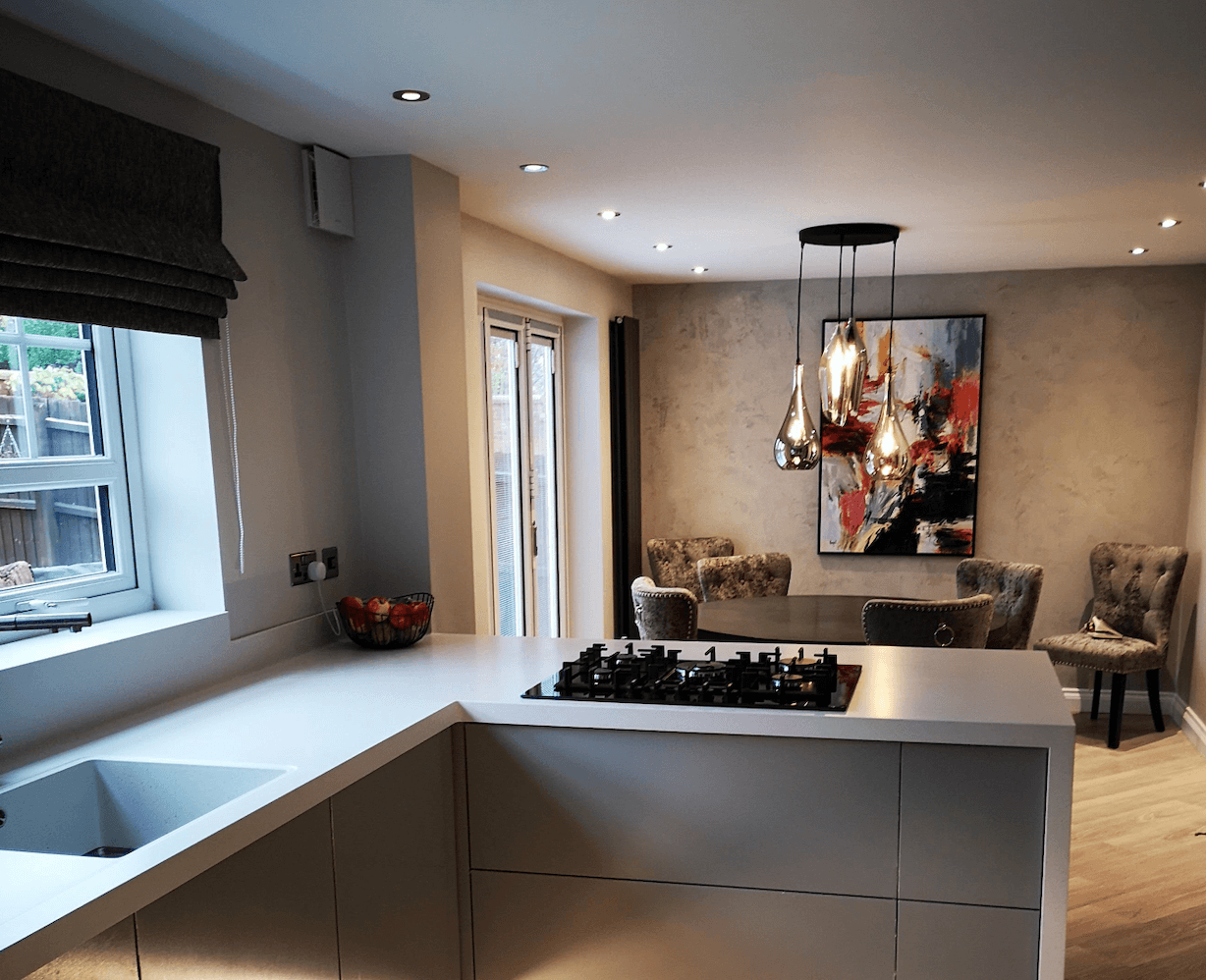
I get asked this fairly often, usually part way through a project. A client will mention they have also been speaking to a lighting designer, and there is a slight pause while they try to work out whether that means they no longer need me, or whether I have somehow missed something in my own plans.
It is a completely fair question, because the two roles overlap more than people expect, and yet they are not the same job at all. Understanding where one ends and the other begins can save you a fair amount of confusion, and sometimes money, further into a project.
In this article, I will walk through what each role actually covers, where they meet in the middle, and when it is genuinely worth bringing in both.
Not sure whether your project needs specialist lighting input? If you are planning a renovation or extension in Northamptonshire and would like help working out what your space actually needs, you can book a consultation with me here or find out more about The Exploratory.
1. What an interior designer actually covers
As an interior designer, my focus is the whole room and how it works as a place to live. That includes layout, furniture, colour, materials, texture in the spaces, window treatment, shape and, yes, lighting, but lighting sits within a much wider brief.
- How the space flows and whether furniture, doorways and sightlines actually work together.
- The overall scheme, including colour, texture, fabric and finishes across the whole room or home.
- Where furniture and joinery sit, and how that affects everything else in the room, lighting included and whether the lighting is highlighting all that needs to be highlighted as part of the anchors or focal points to a design scheme.
- A general lighting plan, covering the type and rough position of fittings, so the room feels right and functions properly day to day in relation to task lighting, the jewellery pieces of a room and the feel good factors.
For most homes, this level of lighting knowledge is genuinely enough. Where it becomes more involved is in larger, more technical or more architecturally ambitious spaces, which is where a lighting designer earns their keep.
2. What a lighting designer specifically brings
A lighting designer works at a level of technical detail most interior schemes do not require, and honestly, most interior designers are not trained to provide.
- Precise photometric calculations, working out exactly how much light a space needs and where, rather than relying on experience and eye alone.
- Layered circuiting and control systems, so different zones and moods can be adjusted independently rather than everything running on one switch.
- Specialist fittings and integration, such as architectural coving detail, stair lighting, or feature lighting built into joinery or ceilings.
- Daylight and artificial light modelling, particularly useful in large glazed extensions or complex rooflines, where getting it wrong is expensive to fix later.
Design Tip: If a room includes anything genuinely technical, recessed stair lighting, integrated joinery lighting, or a large kitchen island with multiple functions, it is usually worth involving a lighting designer at the concept stage, not after the electrics have already been first fixed.
3. Where the two roles overlap
This is usually where the confusion creeps in. Both of us think about mood, atmosphere and how a room feels, and both of us care about where fittings sit. The overlap is real, but the emphasis is different.
- I am thinking about how lighting supports the overall design, the furniture, the finishes, the way the room is used.
- A lighting designer is thinking about how to achieve that feeling technically, with the right fittings, circuits and controls to deliver it precisely.
- We both care about layering, task, ambient and accent light, but a lighting designer will take that layering much further with dimming, scene setting and zoning.
On a well run project, these two perspectives work together rather than in competition. I set the vision for the room, and a lighting designer helps translate the more ambitious parts of that vision into something technically sound.
4. When you genuinely need both
Not every project needs a lighting designer, and I would never suggest bringing one in unnecessarily. But there are certain situations where it makes a real difference.
- Large open plan extensions with bifold doors or rooflights, where daylight and artificial light both need careful thought.
- Kitchens with multiple functions, cooking, dining, working, socialising, that each need their own lighting mood.
- Staircases, galleries or double height spaces, where lighting has to work architecturally as well as practically.
- Whole home automation or control systems, where you want lighting to work consistently across many rooms and switches.
- Period properties with restricted options for cabling or fitting positions, where a specialist can find solutions I might not have the technical grounding to identify.
Design Tip: Bring a lighting designer in at the same time as the early design and interior phases are being planned, not once walls are plastered. Retrofitting proper lighting circuitry after the fact is possible, but it is rarely as neat or as cost effective.
Working on a larger or more technical project? This is exactly the kind of collaboration we build into our full service interior design projects, bringing in specialist lighting expertise where a scheme genuinely benefits from it.
5. How I approach it with my own clients
On most residential projects, I am able to design and specify lighting that works beautifully without needing a separate lighting designer involved. For smaller renovations, single rooms or straightforward extensions, this is usually the most efficient and cost effective route.
Where a project has real technical complexity, an ambitious rooflight, a feature staircase, outdoor landscaping lighting requirements that need to correlate with the inside or a whole home control system, I will recommend bringing in a lighting designer I trust, and I manage that relationship as part of the wider project so nothing gets lost between the two briefs.
The goal either way is the same. Lighting should feel effortless to live with, even when a great deal of thought has gone into making it that way.
Frequently asked questions about lighting and interior design
Do I need a lighting designer for a single room renovation?
In most cases, no. A single room, even a fairly detailed one, is usually well within the scope of a good interior lighting plan as part of the wider design. Lighting designers tend to add the most value on larger, more technically complex spaces.
Will hiring both cost significantly more?
There is naturally an additional fee for specialist lighting design, but it is often set against savings elsewhere, fewer changes once electrics are in, less chance of costly retrofitting, and a scheme that works properly from day one. On the right project, it tends to pay for itself.
Can lighting be added or upgraded after a renovation is finished?
To some extent, yes, particularly with surface mounted or plug in fittings. However, anything requiring new circuits, recessed detailing or additional wiring is far easier and less disruptive to plan before walls are closed up, which is why timing matters so much.
How do I know if my project needs this level of detail?
As a general guide, if your project includes large glazed areas, multi function spaces, statement staircases or whole home control, it is worth at least having the conversation. For most straightforward rooms, a well considered interior lighting plan is genuinely enough.
Ready to get your lighting right from the start?
Whether your project needs a considered lighting plan as part of the wider design, or genuinely benefits from specialist lighting expertise, getting the right people involved at the right time makes all the difference to how a home feels to live in.
If you would like help working out what your own project needs, get in touch and let’s talk it through.
About the author
Nichola Haysey is the founder of Haysey Design & Consultancy, a boutique interior design studio based in Northamptonshire. With over ten years’ experience working on period properties, character homes and contemporary extensions across Northamptonshire, Market Harborough, Rugby, Warwick and the wider Midlands, she specialises in calm, considered interiors that balance beauty with everyday practicality.
Her work ranges from full service, multi room refurbishments to carefully planned extensions and focused design consultations through The Exploratory. You can see a selection of the team’s recent projects in their portfolio.
Related Blogs
Entertaining Without Overwhelm – How Design Choices Make Hosting Effortless
If you're wondering how to make an open plan space feel comfortable, this is…
Designing Skylight and Bifold Spaces for Comfort in the Heat
If you're wondering how to make an open plan space feel comfortable, this is…
Why Open Plan Spaces Are Harder To Live In Than They Look
If you're wondering how to make an open plan space feel comfortable, this is…