

The Hidden Tech of Luxury Living
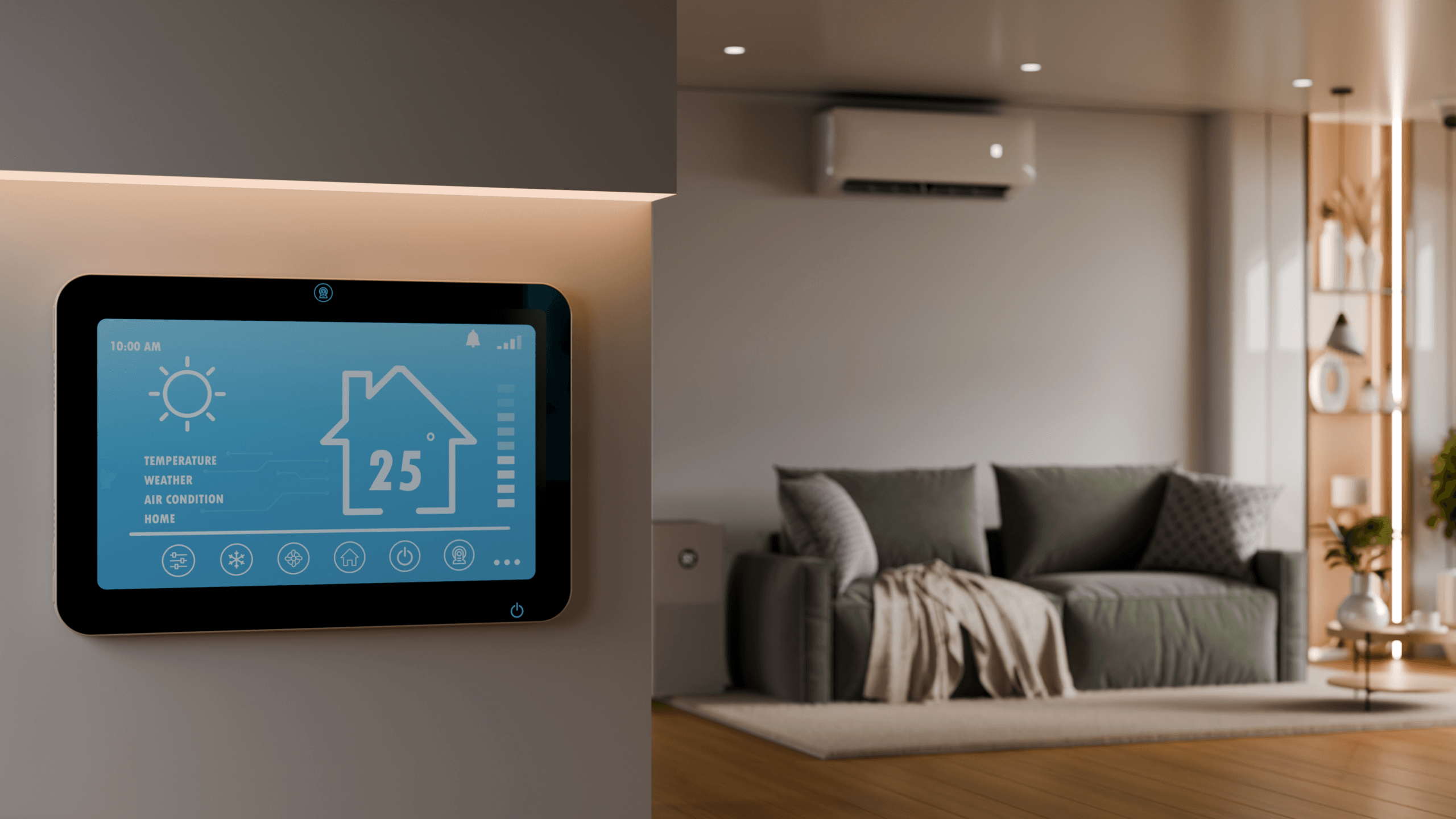
When a home feels really good to be in, it’s rarely just about how it looks. It’s more about how it works.
You notice it when everything feels easy. Nothing jars. You’re not adjusting things or working around awkward bits. You’re just… in the space, and it feels right.
That doesn’t happen by accident.
It comes from decisions that sit quietly in the background, but shape how you live every day.
Things like socket placement, lighting design, heating, and air conditioning.
They’re not the most exciting parts of a home renovation or interior design project, so they often get pushed down the list.
But they’re usually the things that make the biggest difference once you’re actually living there.
The things that get left too late
Sockets are usually the first one.
They tend to get decided quite quickly, often when everything else has already been fixed in place. And by that point, you’re not really designing them — you’re just fitting them in.
That’s when you end up with sockets sitting awkwardly above bedside tables, or all grouped together on one wall, or nowhere near where you actually need them.
The shift is quite simple, but it changes everything.
Think about the furniture first.
Where you’ll actually sit in the evening.
Where a lamp naturally wants to go.
Where you charge your phone without thinking.
What needs to be hidden away.
From there, everything becomes more considered.
Sockets can sit lower, tucked behind furniture so they disappear.
They can be positioned at sideboard or console height so lamps plug in neatly, without wires trailing down the wall — especially in entrance halls where it’s the first thing you see.
They can be built into joinery where it makes sense.
This is where good interior design starts to support real life, not just how a room looks.
Air con doesn’t need to dominate a room
Air conditioning is something people often hesitate over, particularly in bedrooms and living spaces, because they don’t want it to affect the overall look.
And that’s completely fair.
But that’s usually because it’s been added too late, or positioned purely based on where it technically works, rather than how the room will feel as a whole.
When it’s considered early in a renovation or design project, it becomes part of the architecture.
Slim linear vents instead of bulky grilles.
Units concealed within bulkheads, wardrobes, or ceiling voids.
Everything aligned so it feels intentional.
Something I’m working through on a current project is a good example of this.
The most straightforward place for the unit is on an external wall. From an installation point of view, it works perfectly.
But visually, in a bedroom, that can leave you with something quite dominant sitting right in your eyeline.
And that’s not what you want in a calm, considered space.
So we step back and look at the room properly.
What you see when you walk in.
What you see from the bed.
How it sits alongside joinery, artwork, and lighting.
Sometimes that means adjusting the design slightly to get a better overall result.
And airflow matters just as much as placement. If it’s blowing directly onto the bed or seating area, it won’t feel comfortable, no matter how discreet it looks.
When it’s done well, you don’t notice it.
You just notice the room always feels comfortable.
Keeping things simple (but better)
There’s a version of a “smart home” that feels like a lot.
Too many switches. Too many apps. Too much to manage.
That’s not the goal.
The best smart home systems are the ones that feel completely natural to use and enhance how your home works day to day.
Lighting is a big part of that.
Instead of a wall full of switches, lighting can be grouped into scenes that reflect how you actually use the space.
Early morning.
A grey afternoon.
Dinner.
Evening.
Movie night.
You press one button and the room adjusts around you.
Carved or engraved switch plates help elevate this further. They not only look more refined, but make the system intuitive.
You’re not standing there trying to remember which switch does what.
Automatic blinds can also be integrated into the same system, allowing lighting and window treatments to work together throughout the day.
We’ve recently spent time with the fabulous Forbes & Lomax learning about integrating their panels with Roman blinds and floor length curtains and it’s one of those details that makes a real difference. It’s simple, seamless, and works exactly as you’d want it to.
That’s always the aim with this level of design — less noise, more clarity.
The details you don’t really see
Sound is another one that’s often overlooked.
Instead of visible speakers, sound systems can be built into the ceiling so they disappear completely.
It works particularly well in spaces like bathrooms, showers, sauna rooms, pool areas, or garden rooms.
There’s nothing on show. No wires. No visual clutter.
Just music where you want it.
It’s not essential, but it’s one of those additions that quietly enhances how you experience your home.
And sometimes, it’s the smallest things
Even well-planned outdoor lighting can change how you use your space.
Lighting that comes on automatically as the day starts to soften.
You’re still moving through the end of the day, finishing things off, not really thinking about it.
And then the garden lights come on.
Nothing dramatic. Just enough to draw you out.
There’s a small moment where you notice it.
Oh… that’s lovely.
And instead of carrying on, you step outside for a bit. Sit down. Slow things down.
It’s a small detail, but it changes something.
If you’re planning a home renovation or interior design project, this is the point where it’s worth pausing slightly.
Not to overthink it, but to think about how you actually live.
Where you sit.
What you reach for.
What doesn’t quite work in your current space.
Because these are the decisions that shape how your home feels once it’s finished.
And when they’re done properly, you don’t really notice them again.
You just enjoy living there.
Related Blogs
Entertaining Without Overwhelm – How Design Choices Make Hosting Effortless
If you're wondering how to make an open plan space feel comfortable, this is…
Lighting Designer vs Interior Designer: What’s the Difference (and Why You Might Need Both)
If you're wondering how to make an open plan space feel comfortable, this is…
Designing Skylight and Bifold Spaces for Comfort in the Heat
If you're wondering how to make an open plan space feel comfortable, this is…