

The Art of Light and Shade: Why Layered Window Treatments Matter
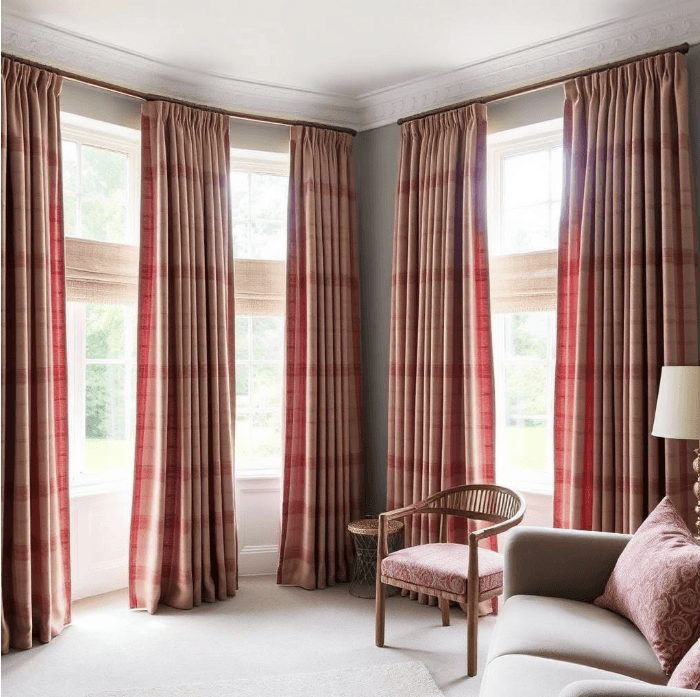
When I visit a home for the first time, one of the quickest ways I can tell a room isn’t quite finished is by looking at the windows. Often, everything else has been chosen with care – flooring, kitchen, joinery, furniture – but the windows have been left as an afterthought, or given a single “make‑do” solution.
Window treatments do far more than just “dress” a room. They control light, privacy, warmth, sound and how a space feels at different times of day. In many of the homes I work in across Northamptonshire – especially period properties and large contemporary extensions – getting this right is the difference between a room that looks good in photos and one that actually feels comfortable to live in.
Layered window treatments are one of the simplest ways to achieve that comfort.
In this article, I’ll walk through what layering means in practice, how I approach it in real projects, and a few of the small decisions that quietly make a big difference.
Thinking about new window treatments as part of a bigger project?
If you’re planning a refurbishment or extension in Northamptonshire and would like experienced help bringing everything together – layout, light, joinery and window treatments – you can book a consultation with me here or find out more about The Exploratory.
Why one layer is rarely enough
Most people start with a simple question:
“Do I need blackout or not?”
That’s rarely the full story.
Think about how you actually use a room over 24 hours:
- In the day, you may want good daylight, but softened to avoid glare on screens or harsh light on seating.
- In the evening, you might want privacy, but still some sense of connection to the outside rather than a completely shut‑off box.
- At night, you may want the room to feel more enclosed and calm, especially in bedrooms.
Expecting a single blind or curtain to handle all of that is asking a lot. Layering gives you flexibility: you can adjust light, privacy and atmosphere instead of settling for one compromise solution.
If you’re planning a larger renovation or extension, this is the kind of detail we build into our full‑service interior design projects from the very beginning, rather than leaving it to the end.
A simple starting point: sheer and solid
In many of my Northamptonshire projects, the most effective and straightforward set‑up is:
- A sheer layer closest to the window.
- A heavier layer in front to add weight, warmth and privacy.
It doesn’t have to be complicated.
Sheer layer
The sheer or voile:
- Softens daylight so it isn’t too stark.
- Takes the edge off direct sunlight and glare.
- Offers privacy during the day, especially in overlooked rooms, without losing the connection to the outside.
In a recent family home near Northampton, a simple ceiling‑mounted track with sheers transformed an open‑plan kitchen and dining space. During the day, you can pull them across just enough to soften the light and take away the “fishbowl” feeling, but you still have a gentle view out to the garden.
You can see a similar approach in our Northamptonshire Family Home project, where light, privacy and softness all needed to work together.
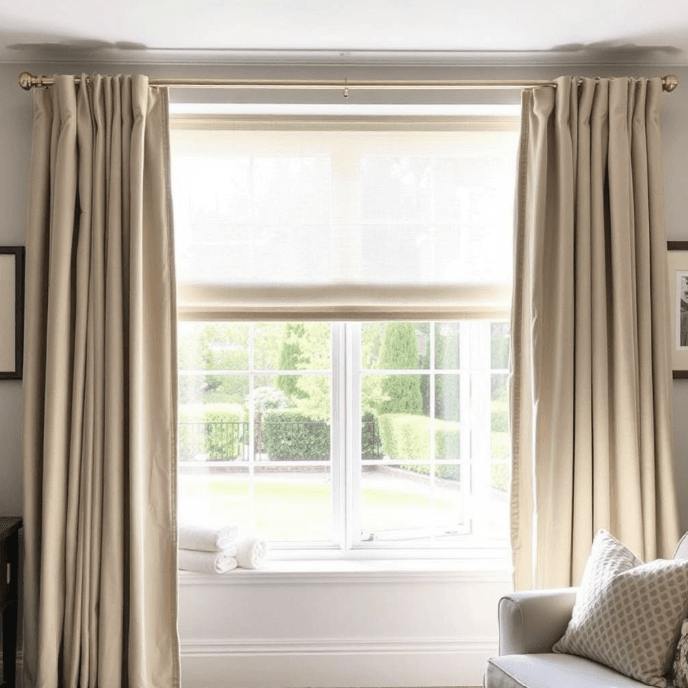
Heavier layer
The second, heavier layer:
- Is what you close in the evening to create a more enclosed, relaxed feeling.
- Helps with insulation and sound absorption.
- Brings a sense of “finish” and intention to the room.
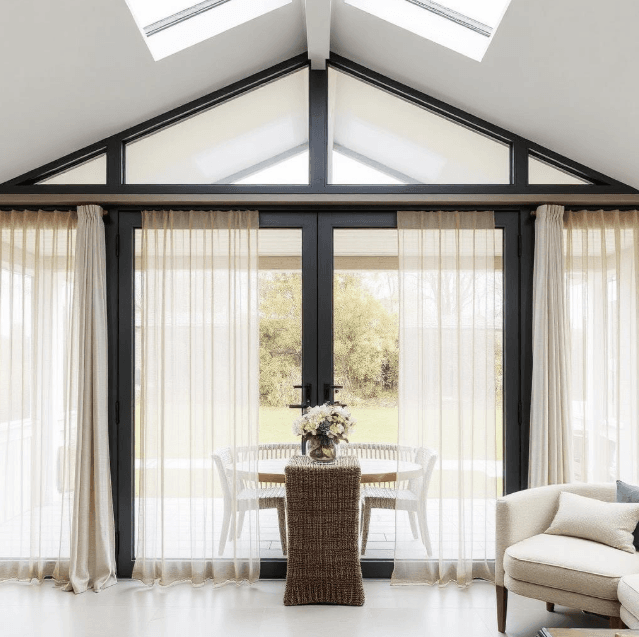
Where space allows, I always prefer full‑length curtains rather than a halfway solution. Floor‑to‑ceiling fabric brings presence, frames the window properly and visually completes the room. Done well, it looks considered rather than fussy.
Curtains that frame the room, not just the window
A common mistake is treating curtains as if they should sit neatly within the window opening. In most rooms, that simply shrinks the space.
A few of the things I look at on every project:
Height of pole or track
- Hanging as close to the ceiling as practicable:
- Draws the eye up.
- Makes the walls feel taller.
- Gives the room more “architecture”, particularly in newer builds that lack period features.
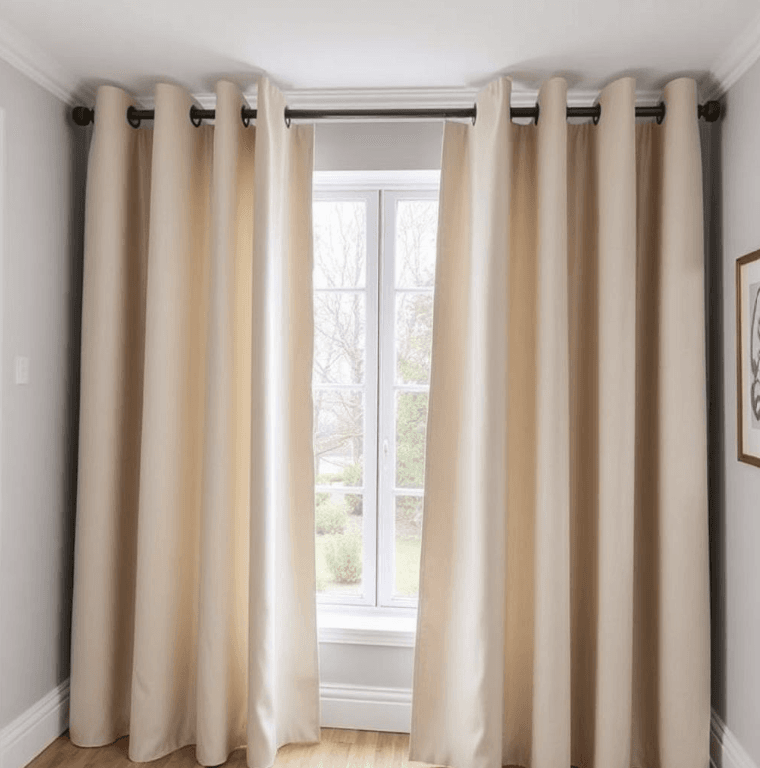
Width and stack
- Extending the pole or track beyond the window on each side:
- Allows the curtains to stack off the glass when open, so you don’t lose light.
- Gives a much more generous, tailored look.
Going too narrow or tight often leads to curtains that sit partly across the window when open, which looks mean and blocks valuable light.
Fabric, fullness and lining
- Too stiff, and the curtains can feel heavy and formal.
- Too flimsy, and they won’t hang properly or hold a pleat.
- Lining matters more than many people realise:
- Lighter lining: softer, diffused light, a gentler look from inside and out.
- Darker or more neutral lining: crisper appearance, more definition to the folds.
Even small decisions here affect how the room reads throughout the day, which is why I always treat them as part of the overall design concept, not an add‑on at the end.
For more technical background on proportion and architectural balance, professional guides from organisations such as RIBA can be useful – but interpreting that theory in a real family home is where a tailored design really earns its keep.
Roman blinds in kitchens and bathrooms
Kitchens and bathrooms are often treated as purely functional, but they benefit just as much from thoughtful window treatments.
Roman blinds are usually my first choice in these spaces because they:
- Sit neatly within the architecture of the room.
- Allow worksurfaces and sanitaryware to run cleanly underneath.
- Can be raised well clear of splashes and steam.
However, there are details that often get missed.
Lining and interlining
- Blackout or protective lining
- Not only controls light, but protects the front fabric from fading and protects the fabric from moisture in the room.
- Particularly important on sunny, south‑facing elevations or in rooms with strong artificial light.
- Interlining
- Adds body, softness and weight.
- Makes even a simple blind feel more considered and luxurious.
- Helps folds sit better and improves insulation slightly – useful in older properties with single glazing.
In a Northamptonshire cottage kitchen, a modest Roman blind, interlined and properly made, did far more for the feel of the room than a larger but flimsier off‑the‑shelf option ever could. It turned a purely practical window into something that contributes to the overall atmosphere.
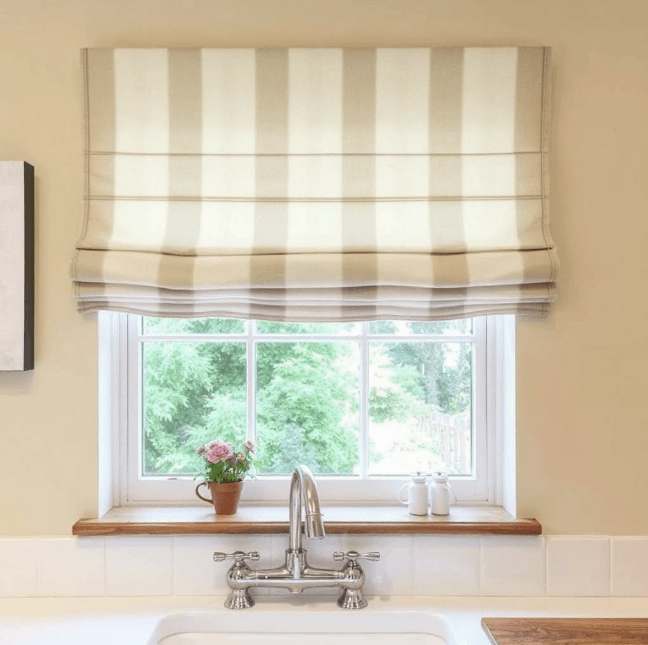
Practical details
Small choices make everyday use easier:
- Which side the controls sit on (especially over a sink or worksurface).
- How you want the blind to look when fully raised:
- Soft and relaxed, or
- More structured with rods giving crisp folds.
- Whether the blind sits within the recess or slightly proud of it.
None of this is complicated, but getting it right separates “something to cover the glass” from something that genuinely enhances the room.
Not sure what’s right for your kitchen or bathroom?
Share a few photos and a brief project outline via my contact form and I can advise on whether blinds, curtains or a layered approach would suit your space and budget.
Hard surfaces, echo and sound
One aspect many clients don’t initially link to window treatments is sound.
Large extensions with glazing across one wall – bifolds, sliders, big picture windows – are very popular locally. They’re wonderful for light and views but can feel unexpectedly echoey, especially with:
- Hard flooring
- Minimal furniture
- Few textiles
In one recent extension with wall‑to‑wall doors, the space looked fantastic but felt tiring, particularly with young children playing on hard floors. Adding full‑length, interlined curtains along the glazed wall:
- Softened the reverberation.
- Took the edge off background noise.
- Made the whole space feel calmer and more settled.
It wasn’t about soundproofing, just bringing the room back into balance so it felt inviting rather than brittle.
If you’re thinking about a large extension or open‑plan space, it’s worth looking at how we approached this in some of our projects on the portfolio, particularly those with generous glazing and hard surfaces.
How I think about layering in real projects
When I’m planning window treatments for a client – whether a Georgian townhouse in Northampton or a newer family home in one of the surrounding villages – I usually work through the same set of questions:
- How is the room used, and when?
Daytime, evenings, occasional guest space, home office, etc. - What’s happening outside the window?
Street, garden, neighbours, open countryside.
Do we need privacy, and at what times? - What’s the quality of light?
Strong direct sun, soft north light, dappled shade.
Do we need to reduce glare, or make the most of limited light? - What’s the architecture doing?
Low ceilings, generous height, awkward bulkheads, radiators under sills, sloping ceilings. - What’s already in the room?
Hard surfaces, soft furnishings, existing colours and textures.
Only then do I decide:
- Whether we need a sheer layer, a solid layer, or both.
- Which rooms justify full curtains, and where a blind is more appropriate.
- Whether we need blackout, interlining, or just a simple lining.
- How high and wide poles or tracks should go to balance the proportions.
The outcome is almost always some form of layering, because homes aren’t static – they’re used in different ways at different times. Layering lets you adjust, rather than compromise.
Thinking about this at the right time
The ideal time to plan window treatments is while you’re designing the space, not once everything else is finished.
That doesn’t mean you have to order them immediately, but it allows for:
- Space for curtain stacks to be designed in.
- Radiators, sockets and built‑ins to be positioned sensibly.
- Ceiling tracks to be recessed or allowed for if you want a more architectural look.
- Budgets to be allocated sensibly rather than whatever is “left over”.
If you leave windows to the very end, you’re often forced into working around existing positions and constraints, which leads to compromises that are hard to reverse.
Planning a renovation or extension in Northamptonshire?
Use The Exploratory to map out layout, light, window treatments and budget in one calm, structured session before you commit to building work.
When to get help (and what working together looks like)
Layered window treatments don’t have to be elaborate or overly decorative. The best schemes often look quite simple, but are quietly doing several jobs at once: handling light, privacy, warmth and sound while sitting comfortably within the character of the room.
If you’re at the early stages of planning a refurbishment, extension or whole‑home project in Northamptonshire and would like help getting this right, there are two good ways to start working with me:
- Full‑service interior design – The Signature Experience
For larger or multi‑room projects, I can take you from initial brief through to final installation, coordinating layouts, finishes, window treatments, lighting and furniture so everything works together.
→ Explore The Signature Experience - Focused design planning – The Exploratory
A one‑off, structured design phase to clarify direction, priorities and realistic budget before you make big decisions or speak to builders.
→ Discover The Exploratory
If you already have a project in mind and would simply like to talk it through, you can contact me directly:
→ Get in touch about your project
Frequently asked questions about layered window treatments
Do I always need both curtains and blinds?
Not always. In some rooms, a well‑designed curtain solution is enough; in others, a blind plus a simple sheer might be all you need. The point is to match the layers to how you use the room – light, privacy, warmth and sound – rather than adding fabric for the sake of it.
Are layered window treatments only for very traditional homes?
No. Many of the homes I work in are contemporary extensions or newer properties. Layering can be very clean and minimal – for example, ceiling‑mounted tracks with simple sheers and plain curtains – as long as the proportions and details are right.
Will layered treatments make my room feel smaller?
Done badly, yes. Done well, no. Hanging tracks higher, extending them beyond the window and choosing the right fullness usually makes a room feel taller and more “finished”, not smaller. The trick is to keep stacks off the glass and avoid skimpy widths.
Do I really need interlining?
You don’t always need it, but in many period homes and in spaces where you want a softer, more luxurious feel, interlining makes a visible difference. It adds body, improves drape and helps with both warmth and sound. In high‑sun rooms, it can also help protect the main fabric.
When should I involve a designer in decisions about window treatments?
Ideally while you’re still planning layouts, electrics and joinery – not after everything is built. That way we can allow properly for curtain stacks, track positions, radiator placement and lighting, rather than working around problems later.
If you’d like tailored advice on your own project, you can book The Exploratory or send me a message here with a few photos and a short brief.
About the author

- Nichola Haysey is the founder of Haysey Design & Consultancy, a boutique interior design studio based in Northamptonshire. With over ten years’ experience working on period properties, character homes and contemporary extensions across Northamptonshire, Market Harborough, Rugby, Warwick and the wider Midlands, she specialises in calm, considered interiors that balance beauty with everyday practicality.Her work ranges from full‑service, multi‑room refurbishments to carefully planned extensions and focused design consultations through The Exploratory. You can see a selection of the teams recent projects in their portfolio.
Related Blogs
Entertaining Without Overwhelm – How Design Choices Make Hosting Effortless
If you're wondering how to make an open plan space feel comfortable, this is…
Lighting Designer vs Interior Designer: What’s the Difference (and Why You Might Need Both)
If you're wondering how to make an open plan space feel comfortable, this is…
Designing Skylight and Bifold Spaces for Comfort in the Heat
If you're wondering how to make an open plan space feel comfortable, this is…