

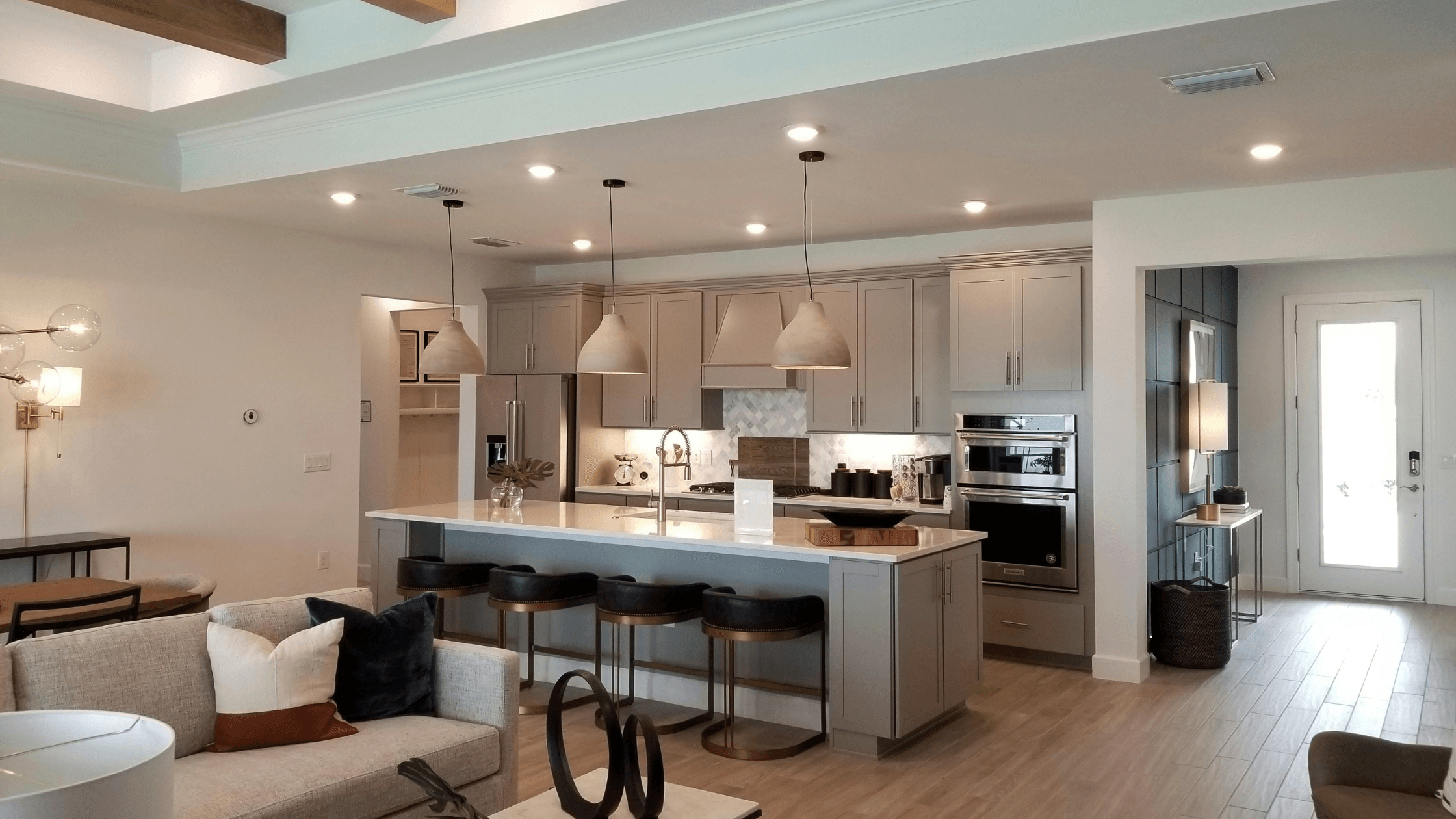
Most homes don’t wake up one morning and decide to feel awkward.
It tends to happen slowly.
A small extension gets added.
A wall comes down to create “open plan”.
A spare room quietly becomes a dumping ground.
At the time, each decision makes sense and none of it feels dramatic. But eventually you realise something feels… off.
You can’t quite put your finger on it. The house isn’t too small. It isn’t ugly. It just doesn’t ‘flow’.
And living in a space that doesn’t flow is surprisingly draining than we realise.
The subtle signs something isn’t working
Sometimes it’s obvious. You’re constantly weaving around furniture.
The dining table has become part of the obstacles en route to the kitchen
The snug sounded like a lovely idea but nobody ever sits in it.
Or maybe it’s more subtle than that.
The kitchen feels disconnected or not quite right, even though the wall’s gone.
The hallway acts like a dead space of no real purpose.
You find yourself always gravitating to one corner of the house while other areas sit unused and slightly forgotten.
Flow is about how naturally you move through a space. When it’s working, you don’t notice it. When it’s not, you feel it every single day.
Please don’t fix it by adding more
This is the bit I say gently.
When a layout feels wrong, the instinct is often to add something else.
Another opening.
Another knock-through.
Another mini extension.
But layering new ideas onto an already confused plan usually makes things more complicated, not less.
Before changing anything structurally, pause.
Zoom out. Look at your house as a whole. Not just the problem room.
Where do you naturally enter and exit?
Where does light travel during the day?
Where does daily life actually happen – not where you think it should?
Once you understand that, the answers become much clearer.
Think in zones, not room labels
One of the most powerful shifts is moving away from traditional room names.
Instead of asking “Where is the dining room?”, ask “Where does dining make sense in this house?”
Instead of “We need a separate office”, ask “Where can work live without disrupting everything else?”
Cooking, relaxing, working, gathering, transitioning.
These are activities, not just rooms.
When you design around how you actually live rather than how an estate agent described the floor plan, the house starts to feel intentional again.
Connection is everything
Flow isn’t always about knocking walls down.
Sometimes it’s about widening an opening slightly so sightlines align.
Repositioning a doorway so it doesn’t interrupt furniture placement.
Creating subtle visual links between spaces so they feel connected without losing definition.
Often the solution is more restrained than people expect.
And that’s usually when it works best.
A calm layout changes everything
When a home really flows properly, it feels settled. We always say, good design should almost go unnoticed – it feels good. Bad design will jar.
You stop second guessing where things should go.
You stop bumping into bottlenecks.
You stop feeling like parts of the house are wasted.
The space supports you quietly in the background.
And the interesting thing is, you don’t always need more square footage to achieve that. You need clarity.
If your home has evolved over time and now feels a little pieced together, a considered layout rethink can completely transform how it functions.
Sometimes the most powerful change isn’t building bigger.
It’s finally making sense of what you already have.
Nic
Haysey Design & Consultancy
Thoughtful spaces, designed around real life
(In Plain English — and From a Designer who’s seen it all)
Related Blogs

Budget Shock: How to stay in control of your interior spend
Planning interiors is exciting… and it’s also where budgets quietly slip. Most…